

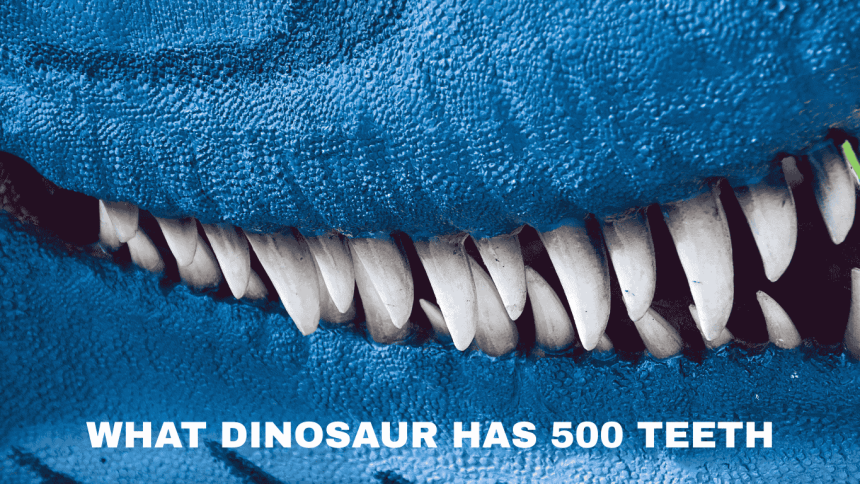
The internet is buzzing with searches about “what dinosaur has 500 teeth,” and the answer might surprise you. This unusual dinosaur discovery has captured public attention for both scientific and unfortunate reasons.
What Is Nigersaurus?
This extraordinary creature was first discovered in the Republic of Niger in West Africa, which is how it got its name – “Niger’s lizard.”
The dinosaur belonged to a group called sauropods, which were typically large, long-necked plant-eaters. Instead of being enormous, Nigersaurus was relatively small, measuring about 30 feet long and weighing around 4 tons.
What dinosaur has 500 teeth? Truly special was its incredible dental structure. This dinosaur possessed approximately 500-600 small teeth arranged in rows along its jaws. These teeth were constantly being replaced throughout the dinosaur’s lifetime, making it one of the most efficient plant-processing machines in prehistoric history.
The Discovery of Nigersaurus
The story of Nigersaurus begins with paleontologist Paul Sereno and his team from the University of Chicago.
The discovery process took several years. The team found scattered bones and skull fragments that didn’t match any known dinosaur species. The delicate nature of the fossils made excavation extremely challenging. The bones were so fragile that they required special techniques to remove them from the surrounding rock without damage.
It wasn’t until 2005 that scientists had enough fossil evidence to describe and name Nigersaurus properly. The complete scientific description revealed just how unique this dinosaur really was. The research team used advanced CT scanning technology to study the skull structure and understand how all those teeth fit together.
Understanding what dinosaur has 500 teeth
Unlike most dinosaurs that had relatively few large teeth, Nigersaurus had evolved an entirely different approach to processing plant material.
How the Teeth Were Arranged
The teeth were organized in multiple rows along both the upper and lower jaws. Each jaw contained about 50-60 active teeth at any given time, with several replacement teeth waiting behind each active tooth. This system meant that Nigersaurus could have up to 500-600 teeth in various stages of development at once.
The teeth were incredibly small – only about 2-3 millimeters long. They were also very delicate, designed more for the gentle cropping of soft vegetation rather than grinding tough plant material. The teeth had a slight curve and were perfectly positioned to work like a pair of scissors when the jaws closed.
Tooth Replacement System
The most amazing aspect of Nigersaurus teeth was how quickly they were replaced. What dinosaur has 500 teeth? Scientists estimate that each tooth was replaced every 14-21 days. This rapid replacement rate was necessary because the teeth were so small and delicate that they wore down quickly from constant use.
The replacement system worked like a conveyor belt. New teeth developed behind the active ones, gradually moving forward as older teeth fell out.
Physical Characteristics and Lifestyle
Beyond its famous teeth, Nigersaurus had several other interesting physical features that set it apart from other dinosaurs.
Body Structure
While most long-necked dinosaurs could lift their heads high into trees, Nigersaurus kept its head low to the ground. The neck vertebrae were specially adapted to support the weight of the massive skull and dental battery.
The dinosaur’s backbone was also unique. It contained hollow spaces that made the bones lighter while maintaining strength. This adaptation was crucial because the heavy skull needed to be supported by a lightweight but strong skeletal structure.
Feeding Behavior
The dental structure of Nigersaurus tells us a lot about how it lived and fed. The dinosaur was a ground-level browser, meaning it fed on low-growing plants, ferns, and other soft vegetation. The wide mouth and numerous small teeth were perfect for cropping large amounts of plant material quickly.
Nigersaurus may have fed somewhat like a modern lawnmower, systematically moving across areas of vegetation and cropping plants close to the ground. The rapid tooth replacement system supported this intensive feeding strategy.
Habitat and Environment
During the Cretaceous period, the area where Nigersaurus lived was very different from today’s Sahara Desert. The region was lush and green, with rivers, lakes, and abundant plant life.
Nigersaurus shared its habitat with other dinosaurs, including predators like Spinosaurus and other plant-eaters. The abundance of low-growing vegetation provided plenty of food for this specialized feeder.
Why This Discovery Matters
Evolutionary Significance
Nigersaurus represents an extreme example of evolutionary specialization. The development of 500+ teeth and the rapid replacement system shows how dinosaurs adapted to specific ecological niches. This specialization demonstrates the incredible diversity of feeding strategies that evolved among dinosaurs.
The discovery also highlights how much we still don’t know about dinosaur diversity. What dinosaur has 500 teeth? Nigersaurus was unlike any dinosaur previously discovered, suggesting that many more unique species remain to be found.
Scientific Methods and Technology
The study of Nigersaurus has advanced paleontological techniques. The delicate nature of the fossils required new methods for excavation and study. CT scanning technology allowed scientists to examine the internal structure of the skull without damaging the specimens.
These technological advances have applications beyond studying Nigersaurus. The techniques developed for this research help paleontologists study other delicate fossils and understand complex anatomical structures.
Internet Fame and Misunderstandings
The dinosaur’s name has been misused in inappropriate jokes and memes due to its resemblance to offensive terms.
Educational Importance
Despite internet misuse, Nigersaurus remains an important educational example. The dinosaur demonstrates how evolution produces amazing adaptations for specific lifestyles.
The discovery also shows how modern technology helps us understand ancient life. The combination of fieldwork, laboratory analysis, and advanced imaging techniques reveals details about dinosaurs that would have been impossible to discover just a few decades ago.
Promoting Scientific Literacy
Learning about What dinosaur that has 500 teeth? It properly helps promote scientific literacy and appreciation for paleontological research. Understanding the real story behind this remarkable dinosaur is more fascinating than any internet meme.
Other Dinosaurs with Interesting Teeth
While Nigersaurus holds the record for the most teeth, other dinosaurs also had fascinating dental adaptations.
Hadrosaurus (Duck-billed Dinosaurs)
Hadrosaurus, also known as duck-billed dinosaurs, had dental batteries with hundreds of teeth. However, their teeth were larger and designed for grinding tough plant material rather than gentle cropping.
Triceratops
Triceratops had a powerful beak and batteries of small teeth for processing tough vegetation. While not as numerous as Nigersaurus teeth, Triceratops dental adaptations were equally specialized.
Heterodontosaurus
This small dinosaur had different types of teeth for different functions – some for cutting, others for grinding. This diversity of tooth types in a single dinosaur shows another approach to dental specialization.
Current Research and Future Discoveries
What dinosaur has 500 teeth? Research on Nigersaurus continues as scientists discover new aspects of its biology and behavior.
Ongoing Studies
Paleontologists are still studying Nigersaurus fossils to understand details about its growth, development, and daily life. New analytical techniques reveal information about diet, habitat, and social behavior.
Computer modeling helps scientists understand how the jaws and teeth worked together during feeding. These studies provide insights into the biomechanics of this unique feeding system.
Future Expeditions
The fossil-rich formations of Niger continue to yield discoveries. Future expeditions may uncover additional Nigersaurus specimens or even new species with similar adaptations.
Climate change and political instability in the region make fieldwork challenging, but international collaborations continue to support paleontological research in Africa.
Preserving Scientific Heritage
The discovery of which dinosaur has 500 teeth? It highlights the importance of supporting paleontological research and preserving fossil sites.
International Cooperation
The Nigersaurus discovery resulted from a collaboration between American and Nigerien scientists. This international cooperation model helps build scientific capacity in fossil-rich regions while ensuring important discoveries are properly studied and preserved.
Education and Outreach
Museums and educational institutions use Nigersaurus to teach about evolution, adaptation, and scientific discovery. The dinosaur’s unique features make it an excellent example for explaining how scientists study prehistoric life.
What We Can Learn From Nigersaurus
The story of Nigersaurus teaches us several important lessons about life, evolution, and scientific discovery.
Nigersaurus shows us that evolution can produce remarkable solutions to survival challenges. The development of 500+ teeth and a rapid replacement system represents an extraordinary adaptation to a specific lifestyle.
The discovery process demonstrates how scientific knowledge advances through careful observation, international cooperation, and technological innovation. Understanding Nigersaurus required years of fieldwork, laboratory analysis, and collaborative research.
The dinosaur also reminds us that our planet has supported incredible diversity throughout its history. The more we learn about prehistoric life, the more we appreciate the amazing variety of creatures that have called Earth home.
What dinosaur has 500 teeth? It emphasizes the importance of respecting scientific discoveries and using them to promote learning rather than inappropriate humor. This remarkable dinosaur deserves recognition for its scientific significance rather than internet infamy.
The 500-toothed dinosaur continues to contribute to our understanding of prehistoric life and evolution. As research continues, Nigersaurus will undoubtedly reveal even more secrets about the amazing diversity of dinosaurs and the ancient ecosystems they inhabited.