
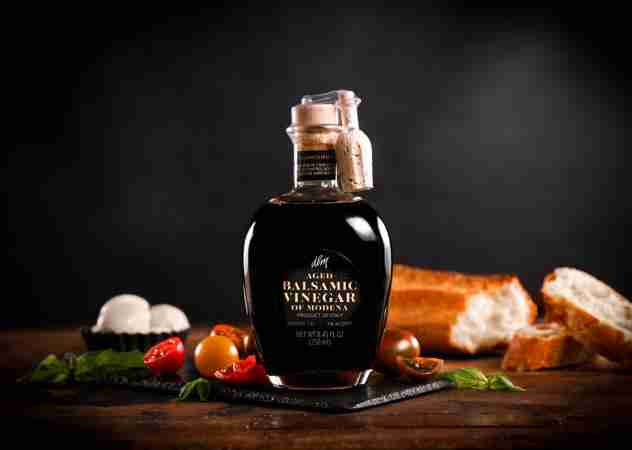
Balsamic vinegar of Modena is a delicate and precious product that deserves careful storage to keep its qualities intact over time. Although it does not have an actual expiry date, poorly stored balsamic vinegar can lose aromatic complexity or change texture. Knowing how to treat it once purchased is essential to enhance its flavour and structure.
Correctly storing balsamic vinegar means respecting its artisanal nature, avoiding temperature fluctuations, shielding it from light and humidity, and using suitable containers. Small precautions make a big difference, especially when dealing with high-quality products.
Ideal conditions for perfect storage
To preserve the characteristics of balsamic vinegar of Modena, keep it in a stable, cool place away from direct light. Even though it does not need refrigeration, excessive heat or sudden changes can compromise its aromatic profile. A cool pantry, far from heat sources like stoves and ovens, is ideal.
High-quality products, such as the balsamic vinegar of Modena made by Acetaia Leonardi, deserve special attention even after purchase. Because these condiments are produced by artisanal methods and patiently aged, it is important to avoid anything that could accelerate oxidation or alter their natural density. Prolonged exposure to light, for example, can fade the colour and alter the palate experience.
Another aspect not to overlook is the stopper: it must always be tightly closed to keep out air, which over time could affect the product’s quality. Properly stored balsamic vinegar retains its intensity and even improves with time, much like a fine wine.
How to avoid flavour and texture alterations
Correct storage of balsamic vinegar of Modena involves not just where it is kept but also daily good practices that safeguard its organoleptic qualities. One main risk is prolonged air exposure, which can lead to the evaporation of volatile components and a loss of aroma and strength.
Avoid contact with contaminated utensils or those that are wet, since even small amounts of water or residue can compromise the vinegar’s purity. Always use the original cap and close it carefully after each use. Denser, long-aged condiments are even more sensitive to these changes.
Another useful precaution concerns humidity: in overly humid environments, the label may deteriorate and the stopper may warp, weakening the seal. Keeping the bottle clean, dry, and protected from climatic swings prolongs the product’s life and ensures perfect enjoyment every time.
Duration, containers, and practical tips
Balsamic vinegar of Modena has no mandatory expiry date, but for optimal enjoyment, it is best to consume it within a few years of opening, especially for younger, lighter versions. Older, more concentrated products tend to keep better, maintaining their aromas and density for years if well protected.
Regarding containers, the ideal choice is dark glass, which shields the vinegar from light and does not release substances into the liquid. Avoid plastic or metal, which could alter flavour and quality over time. Many vinegar factories, such as Acetaia Leonardi, opt for thick, meticulously designed bottles to ensure excellent preservation.
Finally, keep the bottle in a vertical position so the cork stopper does not become soaked and release odours or alterations. Well-stored vinegar offers renewed pleasure every time the bottle is opened, gracing both simple dishes and gourmet recipes with elegance.