


Whether you’re stuck on a busy highway or in your own driveway, knowing how to change a tire is an essential skill that can save you time, money, and stress. This comprehensive guide will walk you through every step of the tire-changing process, ensuring you can handle this common roadside emergency with confidence.
Safety First: How to Change a Tire Safely
Your safety should always be the top priority when changing a tire.
Choose a Safe Location
Ideal locations include:
- Gas station parking lots
- Well-lit store parking areas
- Wide highway shoulders (if necessary)
- Your own driveway or garage
Make Yourself Visible
Once you’ve found a safe spot, turn on your hazard lights immediately. This alerts other drivers to your situation, even during daylight hours.
Secure Your Vehicle
If you have wheel wedges or chocks, place them behind the tires opposite the flat tire for added stability.
Essential Tools: How to Change a Tire
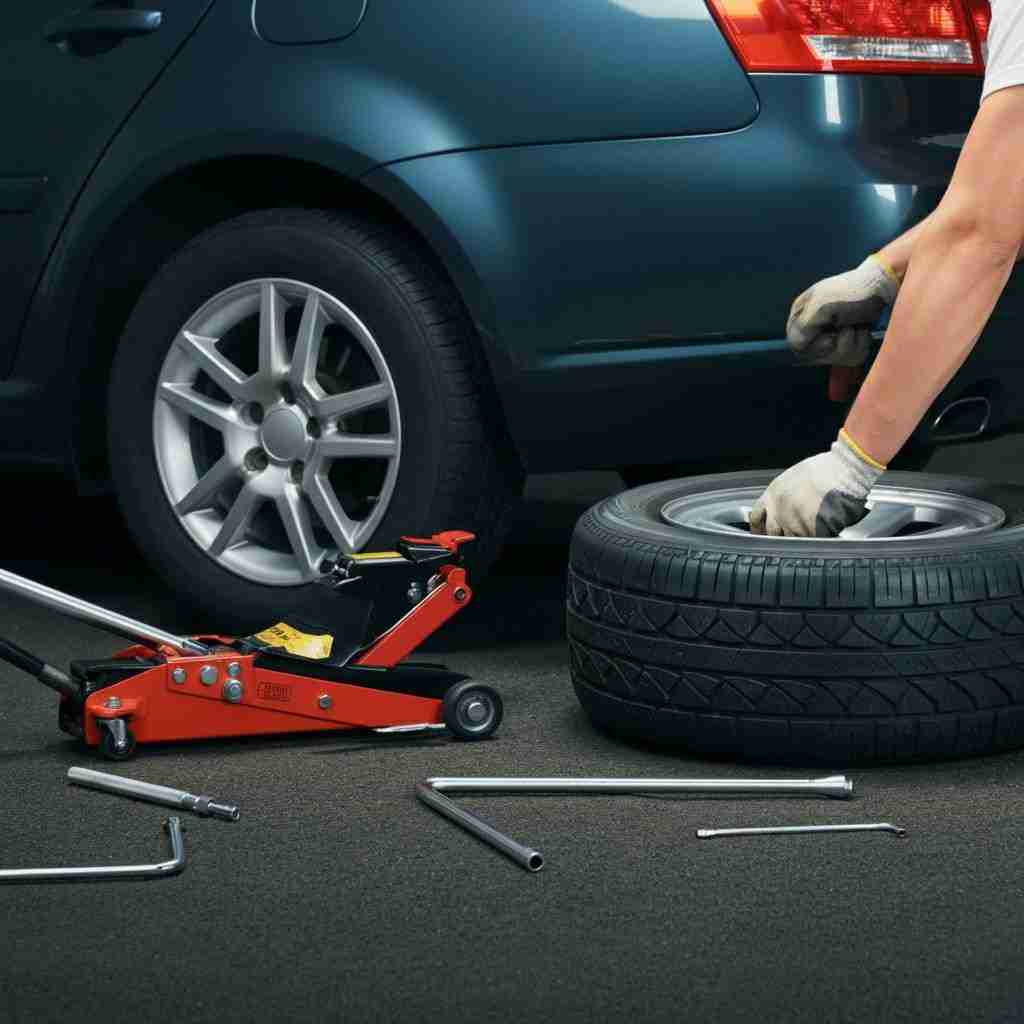
Before you begin, gather all the necessary tools. Most vehicles come equipped with a basic tire-changing kit, but it’s worth checking periodically to ensure everything is present and in good condition.
Required Tools
- Car jack: Designed specifically for your vehicle’s weight and lift points
- Lug wrench: Also called a tire iron, used to remove lug nuts
- Spare tire: Check regularly to ensure it’s properly inflated
- Owner’s manual: Contains vehicle-specific instructions and jack point locations
Additional Helpful Items
- Wheel wedges: Provide extra stability by preventing vehicle movement
- Tire pressure gauge: To check your spare tire’s pressure
- Portable tire inflator: Useful for topping off your spare if needed
- Work gloves: Protect your hands from dirt and sharp edges
Read Next: Trucks
Step-by-Step How to Change a Tire Process
Now that you’re prepared with the right tools and safety measures, let’s walk through the actual tire-changing process.
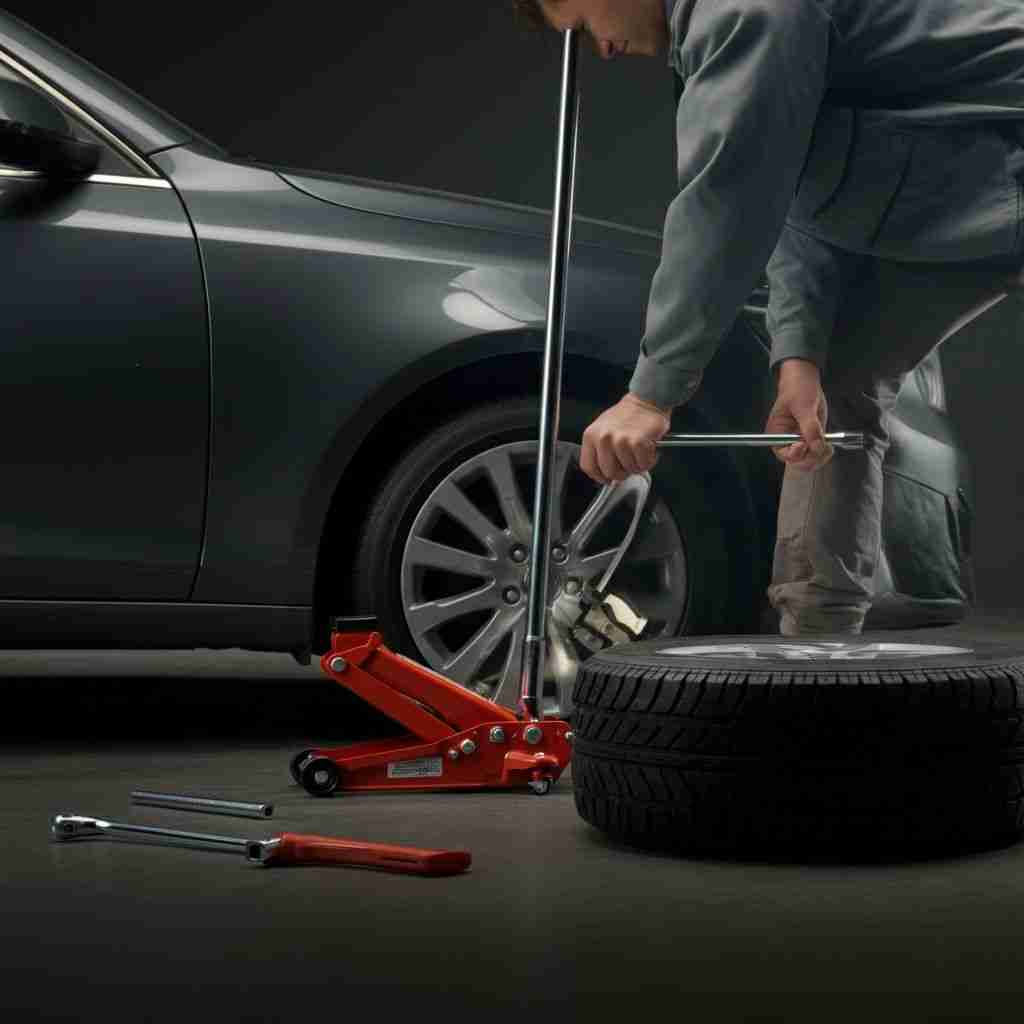
Step 1: Loosen the Lug Nuts
You may need to use your full body weight to break them loose, as they’re typically tightened very securely. Don’t remove the nuts completely at this stage—just loosen them enough that they can be easily removed by hand once the vehicle is raised.
If your wheel has a hubcap, you may need to remove it first using a flathead screwdriver or the flat end of your lug wrench.
Step 2: Position and Raise the Jack
These are reinforced areas of the frame designed to safely support the car’s weight. Using the wrong lift point could damage your vehicle or cause it to fall.
Position the jack securely under the designated point and slowly raise the vehicle. Lift the car high enough that the flat tire clears the ground completely, allowing room for the inflated spare tire.
Step 3: Remove the Flat Tire
With the vehicle safely raised, completely remove the loosened lug nuts and set them aside in a secure location where they won’t roll away. A good trick is to place them inside the hubcap or in your car’s cup holder.
The tire may be heavier than expected, so use proper lifting technique.
Step 4: Mount the Spare Tire
The holes in the spare tire should line up perfectly with the wheel studs.
Replace the lug nuts and tighten them by hand in a star or crisscross pattern. This ensures the wheel mounts evenly on the hub. Tighten them snugly by hand, but don’t use the wrench while the wheel is still off the ground.
Step 5: Lower the Vehicle
Slowly lower the jack until the spare tire touches the ground but still supports some of the vehicle’s weight. At this point, you can use your lug wrench to give the lug nuts a preliminary tightening.
Continue lowering the vehicle until it’s completely on the ground, then remove the jack entirely.
Step 6: Final Lug Nut Tightening
Follow the same star or crisscross pattern you used when installing them. Apply firm pressure to ensure they’re properly secured—loose lug nuts can cause your wheel to come off while driving.
Post-Change Checklist
After successfully mounting your spare tire, there are several important steps to complete before driving away.
Store Your Equipment
You’ll need these tools again, and the flat tire should be repaired or replaced as soon as possible.
Check Tire Pressure
Use a tire pressure gauge to check your spare tire’s pressure. Most temporary spare tires (donuts) should be inflated to 60 PSI, but check your owner’s manual for the specific recommendation. If the pressure is low, drive carefully to the nearest gas station to add air.
Understand Spare Tire Limitations
Most vehicles come equipped with temporary “donut” spare tires, which have important limitations:
- Maximum speed: 50 mph
- Maximum distance: 50 miles
- Temporary use only: Not designed for extended driving
Full-size spare tires don’t have these restrictions, but you should still have your flat tire repaired promptly to maintain a proper spare for future emergencies.
Read Next: Car
When to Call for Professional Help
While changing a tire is generally straightforward, some situations warrant calling for roadside assistance:
Safety Concerns
If you’re in an unsafe location with heavy traffic, poor visibility, or dangerous weather conditions, prioritize your safety over convenience.
Equipment Issues
If your spare tire is also flat, your jack is broken, or you’re missing essential tools, you’ll need professional assistance.
Physical Limitations
Changing a tire requires physical strength and mobility. If you’re unable to safely perform the necessary tasks, there’s no shame in calling for help.
Maintain Your Tire-Changing Readiness
Regular maintenance of your tire-changing equipment ensures you’ll be prepared when you need it most.
Monthly checks should include:
- Condition of your jack and lug wrench
- Accessibility of tools in your vehicle
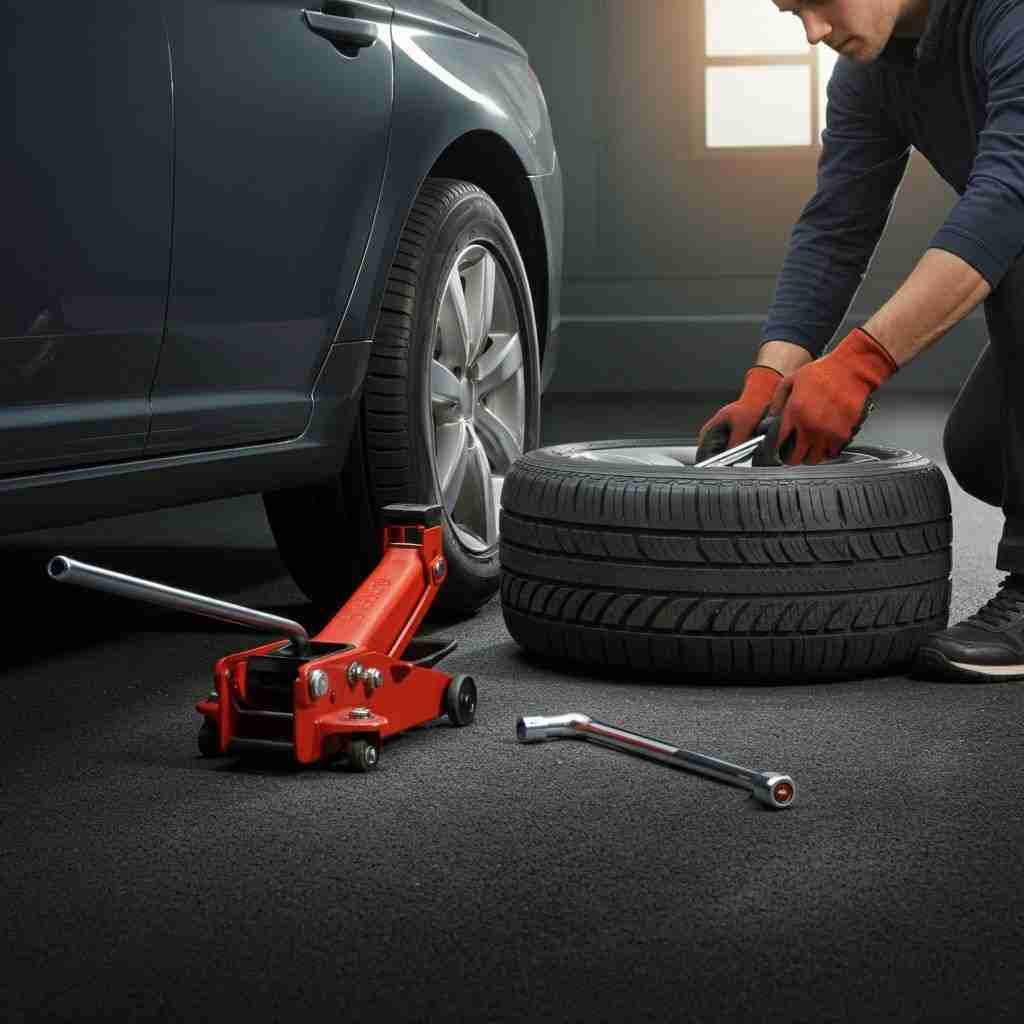
Consider practicing the tire-changing process in your driveway or garage when you’re not under pressure. This familiarizes you with your vehicle’s specific requirements and builds confidence for real emergencies.
Get Back on the Road Safely
Changing a tire doesn’t have to be overwhelming when you know what to do. By following these steps and prioritizing safety, you can handle this common automotive emergency with confidence. Remember that spare tires are temporary solutions—visit a tire shop as soon as possible to repair or replace your flat tire and restore your vehicle to full functionality.
Keep this guide handy, maintain your tire-changing tools, and you’ll be prepared to handle flat tires wherever they occur. Safe travels!