
Museums and art galleries are increasingly turning to headless CMS platforms to create engaging, flexible, and scalable digital exhibits. This innovative approach enables cultural institutions to present their collections in dynamic ways across various digital channels, enhancing visitor experiences both onsite and online. In this article, we explore why museums and art galleries are adopting headless CMS solutions, outlining the strategic advantages and benefits that this technology provides.
Enhanced Flexibility in Content Delivery
Headless CMS enables museums and galleries to deliver digital content flexibly across a range of channels, including websites, mobile apps, interactive kiosks, AR, and VR. This flexibility allows curators and exhibit designers to flexibly deliver content targeted to the different needs of visitors resulting in consistently richer, more immersive experiences. Headless CMS enables the speedy experimentation of new technologies and exhibit types, keeping cultural institutions fresh and responsive.
Streamlined Multichannel Experiences
For museums and galleries, it means a headless CMS that makes it easy to manage content across multiple digital channels. A headless CMS allows the institution to store content in one place and output it with a similar brand look and feel on the website, on digital kiosks, or in mobile apps. Using Axios parallel requests can streamline this multichannel delivery by efficiently fetching content from various endpoints simultaneously. This simplicity in managing multi-channel delivery contributes to a less redundant content management experience and, in the end, a stronger experience for the visitor, regardless of how they interact with the data.
Supporting Interactive and Immersive Exhibits
The digital exhibit experience becomes engaging and extremely interactive for audiences using a headless CMS. This type of CMS uses an API to connect with more robust technology for interactivity AR, VR, 3D, and multimedia narration. Increased opportunities for interactivity allow museums and galleries to better engage their audiences and provide more transformative and educational experiences outside the four walls of a digital exhibit, where visitor satisfaction can only rise.
Improved Scalability for Growing Collections
With museums and galleries digitizing their collections more and more, the ability to scale through headless CMS is essential. Headless content management systems can quickly adapt to tons of digital assets, endlessly growing metadata, and related multimedia engagements and there’s no compromise in performance. Thus, even the most massive of cultural centers can efficiently and quickly render huge digital collections, maintain complicated online exhibitions and heavy multimedia experiences, allowing all users the best access to per collection regardless of size. Thus, the sense of security in managing such vast and expanding collections champions scalability.
Facilitating Real-Time Content Updates
With Headless CMS, whether in a museum or gallery setting, content can be edited across digital exhibit formats in a centralized manner and at lightning speed. Instant API updates ensure that information about exhibits, events, and multimodal and interactive options are instantly changed to be current, accurate, and suitable. Whether a curator needs to change an event at the last minute or they receive patron feedback for changes or minor adjustments to an exhibit, it can happen in real time and provide patrons with responsive, timely experiences that enhance engagement and trust.
Enhanced Personalization and Audience Engagement
Museum and gallery visitors will benefit from hyper-personalized experiences thanks to headless content management system technology. Headless content management systems are adaptable, meaning they’ll be able to generate content in the moment based on user preference, previous viewings, geo-location, or population-specific types (field trip groups vs. general admission). When content is personalized, engagement skyrockets and visitors find they better resonate with certain exhibits while being encouraged to explore more comprehensive inquiries into digital or supplemental collections, greatly boosting visitor satisfaction and retention rates.
Simplifying Digital Asset Management
With Headless CMSs, managing digital assets becomes a simplified process whereby institutions can rapidly catalog, save, and disseminate a variety of multimedia resources from digital assets like high-resolution images and videos to sound files and engaging experiences. When digital assets are stored in one location, it’s easier to access them, work streams are more fluid, and redundancies are avoided. This type of initiative fosters productive operations, ensuring that curators can easily do the behind-the-scenes work for content-driven exhibits for various digital platforms.
Improving Accessibility and Inclusivity
Adopting headless CMS solutions helps museums and galleries improve accessibility and inclusivity of their online exhibition offerings. With decoupled content, institutions can more readily create accessible content experiences for disabled persons screen-reader compatibility, closed captioning, and alternative content forms. Greater accessibility means that exhibitions can be realized by a greater percentage of the population, validating the cultural institutions’ mission of inclusive, equitable, and welcoming experiences for all.
Advanced Analytics and Visitor Insights
With a Headless CMS integration, museums and galleries obtain better analytics and more thorough evaluations of visitor interactions, engagement patterns, and content effectiveness. They can see how visitors interact with the virtual exhibitions when exhibitions are physical, what is drawing more attention, and what changes can be made based on data collected from physical artifacts. This helps museums create better planned exhibitions, better facilitate marketing efforts, and enable content change through analytics derived from the Headless CMS integration.
Reducing Technical Complexity and Operational Costs
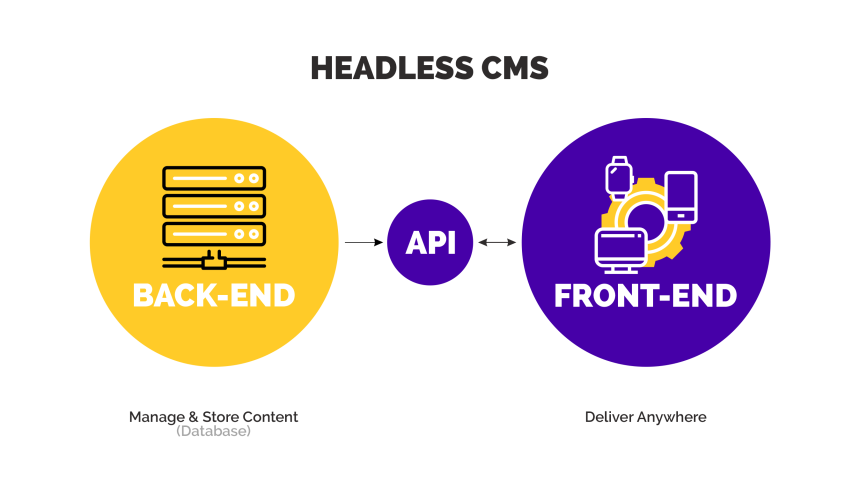
By adopting a headless CMS, museums and galleries reduce technical challenges, simplifying IT operations and costs of operations because of what a headless CMS is. A headless CMS is a decoupled system; thus, how a museum would normally have to operate with its digital assets changes. The backend, where content creation and storage occurs, is independent of the delivery and rendering systems used for the frontend.
This separation allows museum staff to no longer concern themselves with the need to manage a layered infrastructure with control and responsibilities merged into one; instead, they can keep content storage and data management responsibilities siloed from content delivery, UI needs, and audience engagement needs.
By separating the front and back-end systems typically found in a conventional CMS, museums and galleries experience additional ease and flexibility in the management of digital infrastructure. This decreased dependence allows the tech team to expand or contract for front-end requirements without having to expand or contract the back-end for content management at the same time and vice versa.
This means that maintaining infrastructure is a more straightforward, stable, and less resource-dependent task that significantly decreases the continuous time, effort, and cost associated with system adjustments, maintenance, and repairs.
Furthermore, infrastructure reductions and unnecessary technical redundancies lead to savings.
For instance, a typical CMS needs excess servers, additional databases, and extensive networking to ensure proper content delivery and performance specifications. A headless setup reduces many of these requirements as it possesses its own cloud-based, API-driven content delivery system in such a fashion that reduces redundancy and unnecessary system management. Therefore, institutions with a headless CMS have less infrastructure woes, decreased system downtime, and reduced required technical needs and instead have resources to be better spent on more productive, strategic initiatives.
This decrease in costs provides museums and galleries the welcome opportunity to allocate more of the budget toward research and development in content creation, digital exhibition experiences for creative endeavors, and visitor engagement projects. Less of a need to manage extensive technological systems also enables cultural institutions to implement new technologies down the line such as augmented reality (AR), virtual reality (VR), interactive stories, and customizable digital experiences. When these museums and galleries shift focus and reinvest in new areas, the sky’s the limit for retention, growth, deeper audience engagement opportunities, and the ability to better serve their mission.
Ultimately, headless CMS options offer museums and galleries not only a better operating structure for their organizations but also an ease of adjustment and redirected focus into more manageable and beneficial projects that enhance visitor engagement opportunities and cultural potential. Without as much technical overhead, there is a higher chance of successful historical engagement, more flexibility, and ongoing creativity for expanded digital growth in the future.
Strengthening Collaboration Across Teams
Headless CMS solutions enhance internal collaboration as there’s a defined separation between content creation and technical deployment. Curators, designers, and developers of logistics can collaborate more effectively as the content team creates everything it needs for its exhibits without front-end interference, and the technical team works on the necessary front-end deployments. Clearly defined boundaries of workflows and efforts simplify collaborative efforts, communication, and project management, which leads to effective internal efficiencies and higher quality exhibits.
Supporting Long-Term Digital Preservation
Museums and galleries need to ensure their digital content is accessible well into the future. A headless CMS allows for central storage, standardization of formats, and less complicated data management that fosters the simplistic, long-term preservation of digital creations. For instance, digital content created for an exhibition with its metadata and related digital collections can be archived and preserved with ease and certainty down the line for accessibility, accuracy, and time-based integrity. Such simplified systems foster institutional tenure and preservation of historically relevant material.
Enhancing Security and Content Integrity
For cultural institutions presenting online exhibitions, content security and integrity are critical. Headless CMS accomplishes this via secure authentication, role-based access and permissions, and encryption of data management methods. These qualities shield valuable cultural properties and exhibition content from external viewing and untimely digital breaches. A more secure positioning of data, therefore, not only saves the institution’s face should anything ever go wrong, but it also protects public confidence, which fosters appropriate use of assets and materials in the future across digital platforms.
Preparing Institutions for Technological Evolution
Since headless systems are extensions/capable of integration, should developments occur in the future AI-driven curation, for example, or VR tours, or technologies yet unknown as new multimedia presentations these organizations remain adaptable and future-proofed. They can incorporate new systems and technologies as they’re designed to help them stay current, competitive, and engaged with audiences.
Strategic Benefits for Cultural Institutions
Strategic benefits to museums and art galleries implementing a headless CMS involve an enhanced visitor experience, improved content management, greater scalability, and better operational efficiencies. Such technologies turn the distribution of cultural content into a more responsive, interactive, and personalized experience as virtual collections for niche audiences in physical and digital realms. Ultimately, visitors experience greater interaction with art and culture via a website, mobile devices, digital kiosks, and AR/VR systems, facilitating a deeper connection over time with such content.
Furthermore, headless CMS afford a more integrated and centralized content management solution from which to create and curate content, allowing museum staff and exhibition teams to better assess, manage, update, and distribute large quantities of digital assets. A centralized content management system offers the ability to prevent redundancies, a streamlined approach to the content creation process, and avoidance of inefficient means inherent in aging content management software. Curators feel more at ease and able to work quickly when it comes to updating existing exhibits or opening new shows, which yields greater access to quickly addressing new and emerging trends, audience interests, and time-sensitive cultural opportunities.
Moreover, scalability represents another strategic advantage bolstered by using a headless CMS. As institutions grow and develop, they may manage growing digital collections or growing interest from audiences without compromising quality or effectiveness. The scalable quality of a headless CMS allows cultural institutions to better access and manage their multimedia-rich content requirements: high-res images, audio clips, video files, and interactive pieces for continuously high-quality visitor experiences at all times, even during peak traffic times.
Regarding operating expenses, this approach equates to lower overhead in operation. With decreased technical complication from where institutional staff is generating content to where the audience is experiencing said content, less resource distribution is required. Creation and design teams can work more efficiently on their own with less interdepartmental need for clarity because they’re working on different facets of the overall system, and operations become more streamlined with easier decision making and less expensive operational budgets.
Thus, wherever museums and galleries can cut back from typical institutional growth, they can reallocate to exciting new exhibits, improved content, and visitor engagement opportunities.
Ultimately, the purposeful adoption of headless CMS allows museums and art galleries to feel more secure about evolving as time goes on; they can anticipate change and create a new digital reality, for example, instead of the status quo, which could render them obsolete.
The organizations become more flexible and less subject to vulnerabilities of decline, more able to incorporate new technology and offers for engagement. As guests and patrons evolve their expectations, the flexibility and ease of adaptation that comes with a headless CMS provides the best, most necessary, and engaging experiences that keep museums and galleries active, relevant, and part of the digital age.