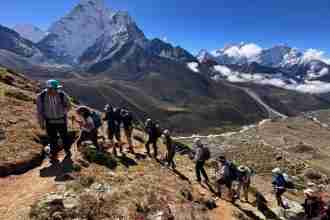


The Annapurna circuit trek One of the most renowned long distance treks on earth is the Annapurna circuit trek. Tucked amid the huge Himalayas of Nepal, this trek is a blend of beautiful sights, local culture and the hard as well as challenging job of passing through one of the most difficult trekking pass in the world, Thorong La (5,416 meters). Unlike many other treks, the Annapurna Circuit is a “round trip,” with a different vista and a different civilization at every stage. From the steamy jungles and terraced fields of the subtropics to the arid high-altitude deserts and sparkling peaks, it illustrates the amazing diversity of terrain and cultures in Nepal.
Below, we’ll break down some of the reasons why the Annapurna Circuit trek is so special, what trekkers can anticipate, and offer a couple of tips to get you ready for this unforgettable experience.
A Journey Through Diverse Landscapes
Depending on where you start and finish the Annapurna circuit trek is a range of 160-230 km. Traditionally the trek began in Besisahar and ended in Pokhara, but recently the road development has disturbed the trek, while some 50% of trekkers had given up half way down the trek, by busing back in the village even less in the valley.
Perhaps most magical about the trek: the shifts from one landscape to another. In the valleys, trekkers walk through dense green forests with waterfalls, bamboo forests and rice terraces. Views change gradually, becoming pine forests, alpine meadows and rocky cliffs as it climbs. You make one final push to the dry, Tibetan-influenced hinterland of Manang, where stark hills are crisscrossed with monasteries from earlier ages. Exiting over Thorong La Pass, you descend to Mustang and the Kali Gandaki Valley, which is drier and has a culture that more resembles Tibet.
This variety makes the Annapurna circuit trek feel like multiple treks in one, and hikers will stay excited and inspired with every step.
Cultural Richness Along the Trail
That the Annapurna circuit trek is life-affirming, not just in the context of its stunning natural beauty, but also its cultural diversity. The trail goes through villages in which we can witness people with various ethnicities such as Gurung, Thakali and Manangi. Each village or town has its own traditions, food and buildings.
You can even, with perfect timing, witness traditional festivals in Manang and visit ancient monasteries, to get a feel for Tibetan Buddhist culture. Further North, Jomsom & Kagbeni add more about Mustang’s Tibetan influenced culture. These discussions suggest the assimilation of Hinduism and Buddhism in the Nepali hills.
All along the way, tea houses also double as cultural centers, where trekkers gather from around the world to swap stories and be among locals. Such hospitality has since defined the trekkers.
It’s All About the Thorong La Challenge
Crossing Thorong La at 5,416 meters (17,769 feet) marks the high point — and biggest challenge — of this trek. This is a proper high pass and lunch here requires a little bit of fitness, some forward-thinking and a healthy set of lungs. Normally trekkers make for a side-visit to either Tilicho Lake or Gangapurna Lake from Manang for acclimatization as part of the itinerary before crossing the pass.
The ascent of the Thorong La usually begins at the crack of dawn, often at around three or four in the morning, to avoid strong winds and allow enough time to cross before the day’s invariable snowfall.
The descent to Muktinath is also an incredibly rewarding portion of the trek, with the Hindu / Buddhist pilgrimage site of Muktinath providing cultural and spiritual encounters.
Annapurna Circuit Trek generally takes 15-20 days based on the trek and speed. There are also shorter treks suitable for Trekkers shorter on time if you would prefer; the trek can also be made easier by supplementing part of the trek with a jeep ride on sections of the road accessible parts of the trail, or by flying from Jomsom to Pokhara after crossing the pass.
The best times to trek are:
Autumn (September~November) Autumn is the best season and it is popular, clear blue skies, calm weather and perfect view on mountain. Villages are full of life, trails are packed with trekkers.
Spring (March–May): The temperatures in spring are higher and there are colorful rhododendron blooms that fill the valley. Time for great nature this season.
Winter (December – February): The trail is even quieter- so much so that in winter it can be impossible to traverse Thorong La because of snow. Suitable only for experienced trekkers.
Monsoon (June-August): That continues to bring plenty of heavy rain, landslides, and humidity to the lower reaches, but the upper Mustang region is quite dry and trek-able.
Preparation and Fitness
We do think of the Annapurna Circuit as a “teahouse trek” with great infrastructure for trekkers but it’s a challenging one as well.
Trekkers need to be prepared both physically and mentally to start.
Fitness: You should be in good cardio shape, practice some hiking, and have some ability to build strength. Treckers need to be capable of hiking 6 – 8 hours per day, uphill and downhill with a rucksack.
Gear: You need good hiking boots, clothing in layers, a sleeping bag, hiking poles on a solid pack. The weather changes fast at high elevations.
Permits: both Annapurna Conservation Area Permit (ACAP) and Trekkers’ Information Management System (TIMS) card are mandatory.
Guides & Porters: Yes, you can trek Solo Independent on the Kangchenjunga Circuit, but with all the local tips, safety aspects and cultural experience along the way a guide provides, your trek will be much better!
Annapurna Circuit Key Highlights What you will love most about Annapurna Circuit:
Manang Village: This is a cultural and adjustement area, with day hiking possibilities to Gangapurna Lake and Ice Lake.
Tilicho Lake: One of the highest lakes in the world and accessible by some challenging side trekking.
Aminath Temple: It is a holy place for Hindus.
Jomsom & Kagbeni: Tibetan-style villlages & barren windswept valleys which serve as the gateway to Upper Mustang.
Kali Gandaki Gorge: The deepest gorge in the world is in between Annapurna and Dhaulagiri.
Tatopani Hot Springs: Soak as a reward for your trekking legs.
Pros and Cons of the Annapurna circuit trek
Pros:
- Diverse landscapes and cultural experiences.
- Well-established teahouse infrastructure.
- Panoramic Himalayan views.
- Meet trekkers from around the globe.
Cons:
- More road has been built so traditional segments have been shortened.
- Exposure to altitude when not properly acclimatized The risks of altitude sickness.
- Crowded trails in peak seasons.
Conclusion
To this day, the Annapurna circuit trek ranks itself among the best on the entire planet. It combines magical nature, cultural experiences and the hum of high-mountain walking into a single amazing experience. Uncertain of your skill/experience-level or age, but if the circuit is a new experience, there’s a new surprise at each corner.
Preparation, cultural knowledge and a steady gait: with those you can say that you have walked the Himalayan classic – and have it inside you forever. The Annapurna Circuit is not just a walk; it is space and time travel across ecosystems and cultures and self.