


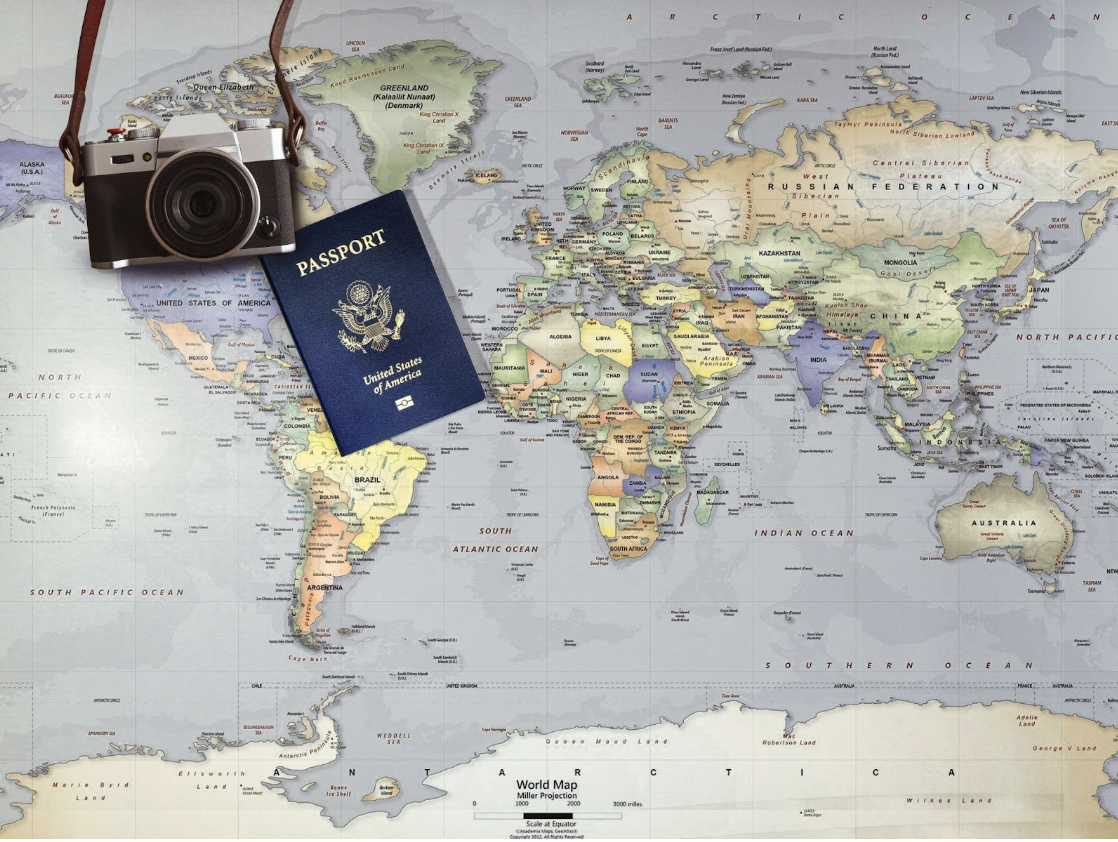

In a fast-paced environment of globalization and mobility, governments, as well as passengers, want to find smarter, quicker, and safer means of crossing the borders. The biometric passport or what is commonly referred to as the ePassport is one of the most revolutionary ideas in this aspect. These passports are revolutionizing the way cross-border security is provided and how passengers take international flights by bidding adieu to the use of biometric data and instead storing this information in the very document that serves to authorize travel, the passport.
This paper examines what biometric passports entail, their role in security of borders and the implication that this digital change has, both positive and challenging.
What Is a Biometric Passport?
A travel document known as a biometric passport has an electronic chip that contains the biometric information of the person in possession of the passport typically a digital photograph, finger prints, an iris scan. Such passports also have a digital signature to stop tampering or forgery since such passports are machine-readable.
Biometric passports were first presented in the first part of the 21 st century but nowadays they are the international standard. More than 150 countries: starting with the U.S, UK, EU member states, Canada, Australia, and others have implemented the ePassport to ease border processes and authentication of identities.
Benefits of Congestion Elimination in Border Security by Biometric Passports
1. Improved Identity Authentication
The traditional passports are based on visual control and comparison of a face of an individual with a printed one. This system has the risk of human error and it is easily forged. Alternatively, in biometric passports, identity verification is automatable. Upon the submission of their ePassport, a border control system will be capable of making a high-probability match between the biometrics data encoded on the ePassport (e.g. facial or fingerprint biometrics) and the physical person before them.
2. Fewer Passport Frauds and ID thefts
Biometric passports used today have their digital chip encrypted and also digitally signed thus it becomes very hard to clone or alter. According to a proposal, the passport will not pass through authentication exercises in the border control center in case the chip has been tampered with. This has greatly curbed the possibility of forged files and stolen identities which were great issues with older non-biometric passports.
3. Border Processing that is Faster and Contactless
Automated outbound eGates and self-service kiosks within an airport are possible with a biometric authentication. Passengers can easily complete the immigration process by just scanning their passports and being identified based on their faces in most cases even without having a direct contact with a human officer. It accelerates border clearance, shortens queues and enhances total efficiency.
4. Watchlists and Databases Integration
A large number of countries combine biometric data with national and international databases, ranging between Interpol watchlists, criminal records and visa systems. This will enable on-time background checks and a quicker way of identifying those who might be a threat to national security.
Adoption and implementation of the global Adoption
United States
Since 2007, biometric elements have been reinvented in the U.S. passports. Electronic facial comparison This is currently being applied in around 230 airports and crossings by Customs and Border Protection (CBP) agency.
European Union
The Schengen Entry/Exit System (EES) applies biometric passports in the EU countries. The system records biometric data and movement of travelers into Schengen territory and out of it enhancing security and adherence to immigration regulation.
The Asian and the Middle East
Countries such as Singapore, Japan, and United Arab Emirates have invested a lot in the biometric border solution. The smart gates of Dubai International Airport that are implemented in the UAE are a good example of how contactless traveling through the use of biometric passports and face recognition works.
Problems and Worry
As much as the biometric passports have its huge benefits many ethical, technical and privacy dilemmas are encountered.
1. Data privacy and Consent
Saving biometric information along with exchanging information wherever an individual is and particularly internationally makes citizens fear the usage and security of personal information. Otherwise, biometric databases may become the sources of hacking or misuse of surveillance.
2. System Errors and Prejudice
Sometimes biometric systems, especially facial recognition, may give the wrong answer: a false positive or a false negative especially against an individual of a marginalized ethnic group. Mis-matches experienced in the process of biometric may cause unnecessary delays and even detention of the wrong people.
3. Infrastructure and Cost
Biometric passport system and automation of the border control would be expensive to establish through investment in technology and training. Not every nation can afford these systems in terms of resources and facilities.
4. Data Breaches
The breach can conceivably happen to the most secure systems. When biometric data is stolen, it can never be changed like any other password, hence, in the long-run, it is very risky to those whose data have been stolen.
Biometric travel in the Future
Biometrics passports are simply one step of a trend that is shifting towards a concept of smart borders and smooth interactions between travellers and destination countries. The developments that could be manifested in future may include:
Digital or mobile passports which can be saved on the smart phone.
- A more transparent system is that of identity that is secured by blockchain.
- Multimodal biometrics, which has face, iris and fingerprint scan to increase accuracy.
- Privacy-sensitive artificial intelligence is secure and infringes on behaviors.
With nations still focusing on securing borders, increasing the convenience of travelers, biometric passports are most likely to be at the heart of discontinuity in global mobility.
Conclusion
Biometric passports are another major linking between technology and travel. They have transformed the process of international travel by making it easier at the border, facilitating the quicker identification of travelers, and generating less fraud. Nevertheless, they also have associated issues in the way they are used majorly in the aspect of privacy, security, and ethical application.
To the travelers, biometric passport mode of operation can portray the ease in which the passports can be used to demystify the mode used, or rather to shed light on the correlation between convenience and security of personal information. As a policymaker and technologist, one needs to keep in mind that: what one needs to focus on is the ability to constitute systems that are not only secure and effective but transparent and just as well.
The passport in your pocket, however, is soon to become merely one element in a trip that is fully biometric and linked to all other parts of a fully digitalized travel experience.