

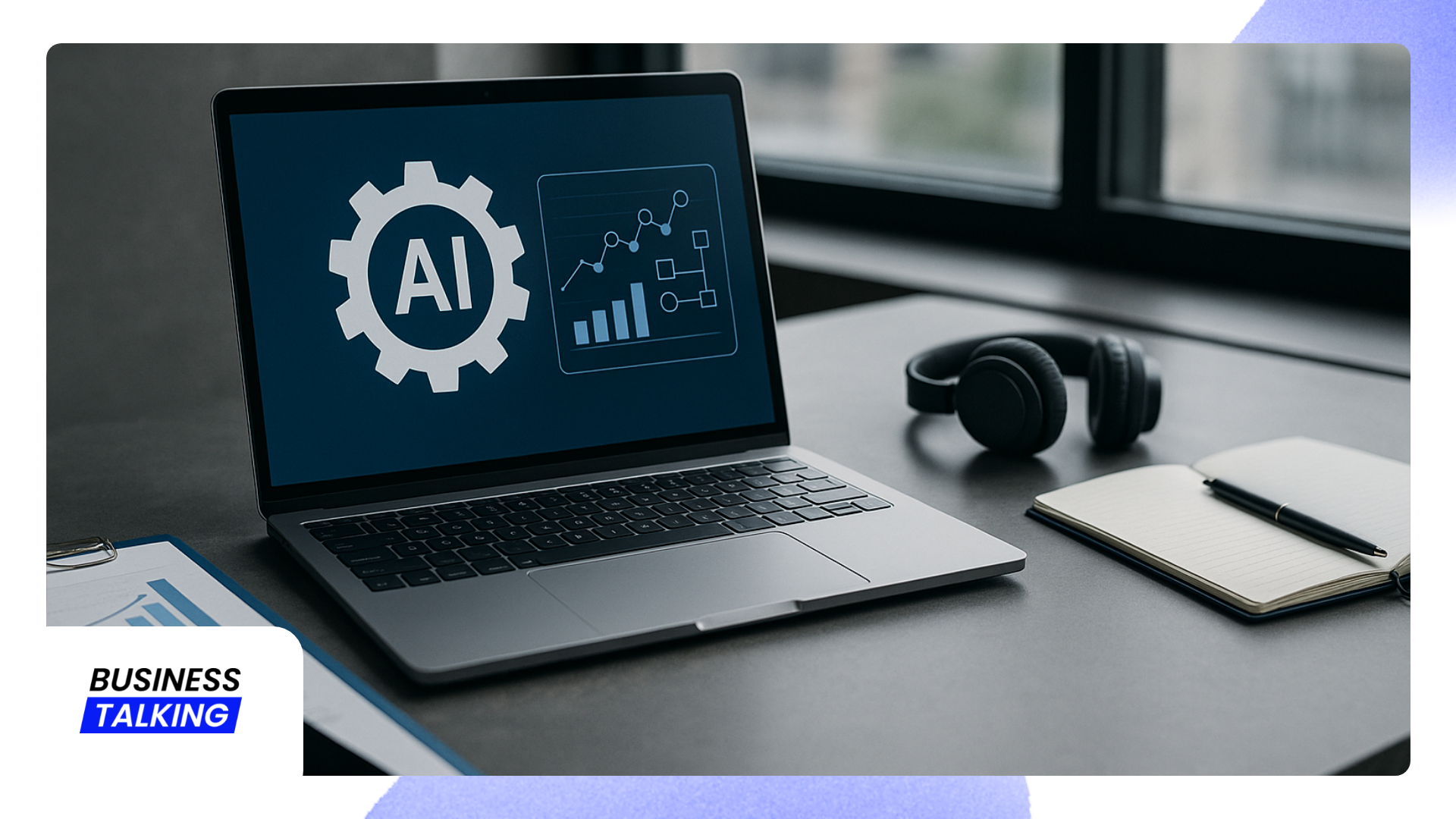

Most firms don’t have an ‘AI problem’, they have a cost problem with a pile of repetitive work sitting underneath it. The hard part is that many AI pilots feel clever but don’t move the P&L. If you want savings, you need AI automation use cases that cut handling time, reduce rework, or stop errors reaching customers. That means picking work with volume, clear inputs, and a defined ‘done’ state. Anything fuzzier tends to become an ongoing experiment.
In this article, we’re going to discuss how to:
- Spot cost-saving work patterns that suit AI support without guessing
- Build a simple cost model so you can judge a use case before delivery
- Set controls that stop ‘savings’ being eaten by risk, rework, or tool sprawl
What ‘AI Automation Use Cases’ Really Mean In Cost Terms
When people say ‘AI automation’, they often mean very different things. For cost reduction, it helps to separate three buckets:
- Assisted work: AI drafts, summarises, classifies, or suggests, but a person still approves. Savings come from shorter handling time per case.
- Semi-managed work: AI completes routine steps within rules and exceptions are routed to a person. Savings come from fewer human touches.
- Decision support: AI surfaces patterns or flags risk so teams act earlier. Savings come from avoided loss or reduced rework, but attribution is harder.
Cost savings are most believable in the first two buckets because you can measure time per item, error rates, and throughput. Decision support can be valuable, but it is easier to over-claim.
Pattern 1: Cut Handling Time In High-Volume Knowledge Work
This is the most common category of AI automation use cases that saves real money because it targets the unit cost of work. Look for tasks where staff repeatedly read a text input and produce a text output, especially when the output follows a known structure.
Customer Support Triage And Draft Replies
Instead of trying to replace agents, focus on triage and first drafts. The system can label the issue, propose a response aligned to policy, and pull the right snippets from internal guidance. Agents then approve, edit, and send.
Cost impact usually comes from reduced average handling time and fewer escalations. The second-order effect is consistency: fewer ‘freestyle’ answers means fewer follow-up tickets and fewer goodwill credits.
Controls that matter: redaction of personal data, a visible confidence signal, and a hard rule that the agent owns the final send. If you operate in the UK, it is also sensible to map the flow against the UK GDPR principles, particularly data minimisation and purpose limitation (ICO guidance: https://ico.org.uk/for-organisations/uk-gdpr-guidance-and-resources/).
Sales And Account Admin Notes
Meeting transcripts and call notes are tedious but costly when they don’t get done. AI can convert transcripts into structured notes, next steps, and CRM-ready fields, with a person checking before anything is written back.
The savings are rarely from ‘more revenue’ claims. They come from less admin time and fewer downstream mistakes caused by missing context. The trade-off is privacy and retention: you need a clear position on what you store, for how long, and where the data goes.
Document Intake And Routing
Think of invoices, claims forms, supplier onboarding packs, and compliance questionnaires. AI can classify the document, extract key fields, and route it to the right queue. This reduces the manual sorting layer that quietly grows as volume increases.
Risk to watch: field extraction errors that create payment mistakes or compliance gaps. This is where assisted work often beats full end-to-end processing, at least until you have good monitoring and a stable exception path.
Pattern 2: Reduce Errors And Rework In Repeatable Processes
Rework is where costs hide: duplicate tickets, repeated approvals, and ‘fix it later’ behaviours. The best candidates are processes with clear rules, common failure modes, and a way to measure what went wrong.
Policy Checking For Outbound Content
Marketing, customer comms, and product teams often lose time in review cycles. AI can act as a first-pass checker against your own requirements: prohibited claims, missing disclaimers, tone issues, or brand constraints. A human still signs off, but fewer rounds of edits reduces labour cost.
Second-order effect: you reduce the chance of inconsistent messaging. Trade-off: if the policy itself is vague, the checker becomes noisy and people ignore it. Tight policy statements beat long documents.
Code Review Support For Common Defects
In software teams, AI can flag patterns like missing input validation, suspicious string handling, or inconsistent error messages. The cost saving is mainly time saved in review and fewer defects reaching production.
Be careful with security claims. AI suggestions should be treated as untrusted until reviewed. For baseline secure development references, the UK’s NCSC has practical guidance (NCSC developer resources: https://www.ncsc.gov.uk/collection/developers-collection).
Contract And Clause Checking
Legal review is expensive because it is specialised and it is often repeated. AI can compare contracts to a preferred clause library, identify deviations, and prepare a short ‘diff’ for counsel.
Where it saves money is in the 80% of low-risk agreements that still require eyes-on. Where it fails is in context: a deviation might be fine in one deal and unacceptable in another. The control is clear routing rules, not higher model confidence.
Pattern 3: Reduce Coordination And Status-Chasing
Status updates, handovers, and chasing responses consume a surprising amount of paid time. These AI automation use cases work best when the system reads existing sources of truth and produces updates without inventing anything.
Weekly Reporting From Existing Systems
Many teams build weekly updates by copying figures from dashboards into slide decks. AI can turn a defined dataset into a consistent narrative, list anomalies, and draft an executive summary. The human checks numbers and edits wording.
The savings are real when reporting is frequent and consistent. The risk is ‘hallucinated’ commentary that sounds plausible but is wrong. This is why the input should be structured, and the output should cite the source system fields it used.
Procurement And Vendor Q&A Handling
Security and procurement questionnaires are often the same questions in different formats. AI can draft answers based on a maintained library of approved responses, and flag where information is missing.
Cost savings show up as fewer hours spent rewriting the same answers. The trade-off is governance: you need an owner for the response library, versioning, and an audit trail of what was sent.
A Simple Cost Model Before You Build Anything
The easiest way to waste money is to build something because it looks impressive, then discover it doesn’t change unit economics. A basic model is enough to screen ideas:
- Volume: number of items per month (tickets, invoices, requests).
- Baseline time: minutes per item today, including rework.
- Target time: minutes per item with AI assistance, including review.
- Loaded cost: hourly cost including overheads, not just salary.
- Quality delta: expected change in error rate and cost per error.
- Build and run cost: engineering time, vendor fees, monitoring, and change management.
Then do the boring maths:
- Time saved per month = volume × (baseline time − target time)
- Labour saving = time saved × loaded hourly cost
- Net saving = labour saving + avoided error cost − build and run cost
Two practical notes. First, if you cannot describe the work as a repeatable flow with clear inputs and outputs, your ‘target time’ is guesswork. Second, savings do not appear if the team simply fills the freed time with more unplanned work. To make savings real, you need a decision about capacity: fewer contractors, slower hiring, or redeploying staff away from backlog that causes costly failures.
Controls That Stop Savings Turning Into New Costs
Even good use cases can end up cost-negative if the controls are weak. The usual failure modes are not technical, they are operational.
Data Handling And Retention
Only send what the model needs. Remove personal data where possible, and set retention rules for prompts, outputs, and logs. If you operate in the EU or UK, GDPR accountability matters as much as the model choice (European Commission overview: https://commission.europa.eu/law/law-topic/data-protection_en).
Human Review Where It Matters
Review should be applied based on risk, not habit. Low-risk drafting tasks can use spot checks, high-risk outputs (financial decisions, legal commitments, regulated comms) should keep mandatory approval. The cost-saving version of ‘human in the loop’ is targeted review, not universal review.
Monitoring, Exception Paths, And Change Control
If you cannot see failure rates, you cannot keep savings. Track a small set of measures: average handling time, percentage routed to humans, error rate by category, and the top reasons for exceptions. Also assume prompts and policies will change, so treat them like code with versioning and sign-off.
Conclusion
The AI projects that save money are usually unglamorous: drafting, routing, checking, and reporting, tied to volume and measurable time. Understanding why AI adoption fails is crucial—many projects stumble because the unit economics and risk controls aren’t modeled upfront, leading to vague outcomes. If you cannot model the unit economics and the risk controls up front, you are betting on vague outcomes. Pick use cases where the ‘before’ and ‘after’ can be measured, then keep human judgement where the downside is real.
Key Takeaways
- Cost-saving AI work usually starts as assisted work, with humans approving outputs in a defined flow
- A basic cost model based on volume, time per item, and error cost is enough to screen most ideas
- Weak controls around data, review, and monitoring can wipe out savings through rework and risk
FAQs
Which AI automation use cases are easiest to prove a cost saving?
High-volume tasks with a clear start and end, like ticket triage, document routing, and structured drafting, are easiest because you can measure minutes per item. If the outcome is ‘better decisions’, attribution becomes harder and savings are easier to overstate.
Do you need full end-to-end automation to save money?
No, and it is often the slower route. Assisted workflows that cut handling time while keeping approval can produce savings sooner with less operational risk.
What usually goes wrong with cost-saving AI projects?
The use case is chosen for novelty rather than unit economics, so time saved is small or unmeasurable. The other common failure is weak governance, which creates rework, privacy issues, and inconsistent outputs.
How do you avoid staff time being ‘saved’ but not reducing costs?
You need an explicit capacity decision, such as slowing hiring, reducing external support, or removing a backlog that causes costly failures. Without that, time saved is often absorbed by other work and the P&L barely moves.
Information only disclaimer: This article is for general information only and does not constitute legal, financial, or professional advice.
Sources consulted:
- Information Commissioner’s Office (ICO), UK GDPR guidance: https://ico.org.uk/for-organisations/uk-gdpr-guidance-and-resources/
- UK National Cyber Security Centre (NCSC), Developers Collection: https://www.ncsc.gov.uk/collection/developers-collection
- European Commission, Data protection overview: https://commission.europa.eu/law/law-topic/data-protection_en
- NIST AI Risk Management Framework (AI RMF 1.0): https://www.nist.gov/itl/ai-risk-management-framework