

Most small businesses skip video because they assume it needs a studio, a crew and a large budget. That assumption costs them reach on platforms where their customers already spend time. A phone, a window with decent light and a written plan will produce footage that does the job. The hard part is deciding what to film, who it is for and where it should live. A sound video marketing strategy settles those questions before anyone presses record.
In this article, we’re going to discuss how to:
- Set one clear business goal for your video content
- Produce usable footage with equipment you probably own already
- Publish, caption and measure each video so it earns its place
Build a Video Marketing Strategy Around One Goal
Start with a single commercial outcome. Examples include booked sales calls, newsletter sign-ups, product page visits or fewer repetitive customer questions. Pick one, because a video marketing strategy that tries to build awareness, drive sales and train staff at once usually does none of them well.
Next, name the viewer. A founder selling accounting software to freelancers needs different videos from a café owner trying to fill weekday mornings. Write the viewer’s most common question on a sticky note and make your first five videos answer it.
What a Low-Budget Video Marketing Strategy Includes
A low-budget video marketing strategy needs four parts: a goal, a viewer, a repeatable format and a publishing routine. Everything else is optional. Commit to a schedule you can keep, such as one short video a week for twelve weeks, and review it at the end.
Tie each video to a stage of the buying process. Short answers to common questions suit people who are still comparing options. Walkthroughs and demonstrations suit people close to buying. Customer stories suit anyone who needs reassurance before they commit. If you are still shaping how your company presents itself, read our guide on how to build a brand first, because video exposes weak positioning quickly.
Equipment You Actually Need
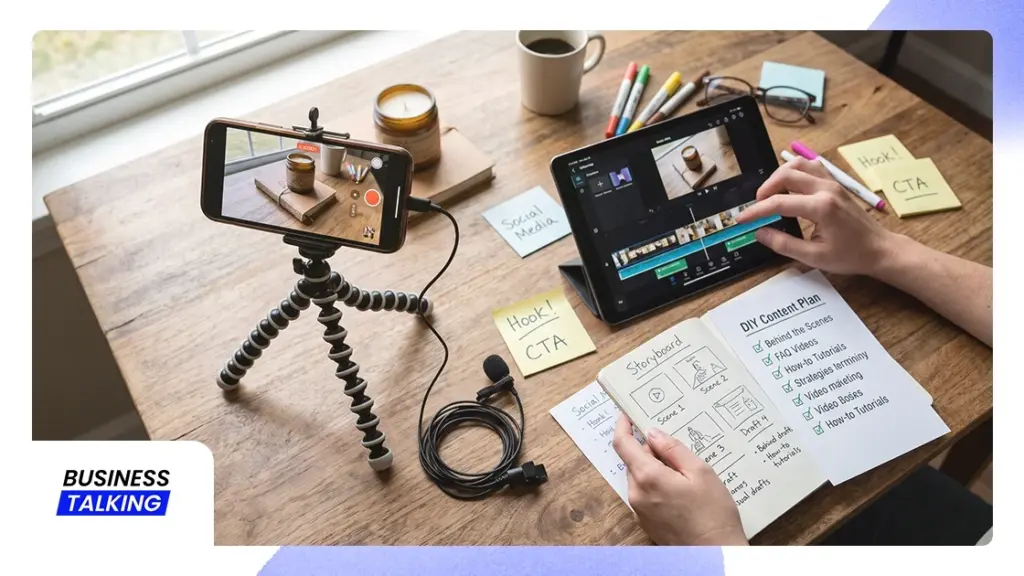
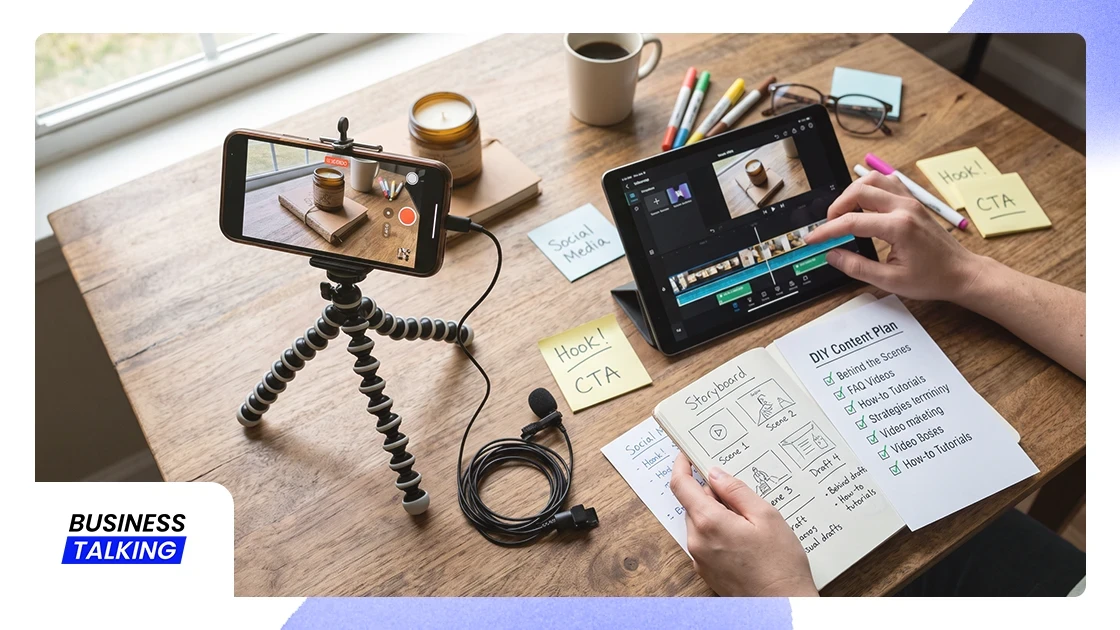
A recent phone is enough for most business video. Use the rear camera, film in landscape for YouTube and website pages, and in portrait for Shorts, Reels and TikTok.
Audio matters more than picture. A basic clip-on microphone fixes the most common amateur problem, which is echo and background noise. Natural light from a window comes next, with the window in front of you rather than behind. A cheap tripod or a stack of books keeps the phone steady.
Formats That Work Without a Crew
Five formats cost almost nothing to produce. Answer videos respond to one customer question in under 90 seconds. Screen recordings show how a product or process works. Behind-the-scenes clips show how the work gets done. Founder explainers give a clear opinion on a trend in your sector.
Repurpose every recording. One ten-minute walkthrough can become a full YouTube video, three short clips and a transcript for a blog post. This is where a wider content marketing strategy pays off, because one idea then feeds every channel and your video marketing strategy stops being a separate workload.
Where to Publish and What the ASA Expects
Publish where your buyers already look. B2B firms tend to start with YouTube and LinkedIn, while consumer brands usually begin with Instagram Reels and TikTok.
Add captions to every video. YouTube creates automatic captions in many languages, but it encourages creators to add professional ones first. Captions also make your video usable for deaf and hard-of-hearing viewers and for anyone watching with the sound off.
If a creator is paid to feature your product, the content is likely to count as an advert and needs a clear label. The Advertising Standards Authority recommends ‘#ad’ as the simplest label. It says disclosure placed at the end of a post, where viewers only see it after they interact, is not acceptable, and it has ruled labels such as ‘gifted’ and ‘affiliate’ inadequate.
Measuring Whether Video Pays Its Way
Judge each video against the goal you set. Views measure reach only. Track average view duration on YouTube, clicks to your site and the number of enquiries that mention a video.
After twelve weeks, keep the formats that produced enquiries and drop the rest. A video marketing strategy only works if you are willing to cut what fails.
Conclusion
Effective business video depends on a clear goal, a defined viewer and a routine you can sustain. Start small, publish consistently and review the evidence before spending on kit or crew. For more practical guidance, browse our digital marketing guides.
- Pick one goal and one viewer before you film anything
- Spend on audio and light before you spend on cameras
- Review results after twelve weeks and cut what fails
Frequently Asked Questions
How Long Should a Business Video Be?
Keep it as long as the answer needs and no longer. Customer questions often fit in under 90 seconds, while product walkthroughs can run for several minutes.
Do I Need a Professional Editor?
Not for most short videos. Free tools such as YouTube Create or your phone’s built-in editor cover trimming, captions and music.
How Often Should a Small Business Post Video?
Choose a rhythm you can keep for at least twelve weeks, such as one video a week. Consistency gives you enough results to judge which formats work.
Do I Have to Label Sponsored Videos as Ads?
Yes, if the content is an advert, UK rules require it to be obviously identifiable as one. The ASA recommends ‘#ad’ made clear upfront as the simplest label.
Sources Consulted
- ASA: Like, follow and subscribe to our influencer marketing advice
- ASA and CAP: Influencers’ guide to making clear that ads are ads
- YouTube Help: Add subtitles and captions
- YouTube Help: Use automatic captioning
Disclaimer: This article is for information only and does not constitute legal, advertising or professional advice. Check current ASA and CAP rules before running paid or influencer campaigns.