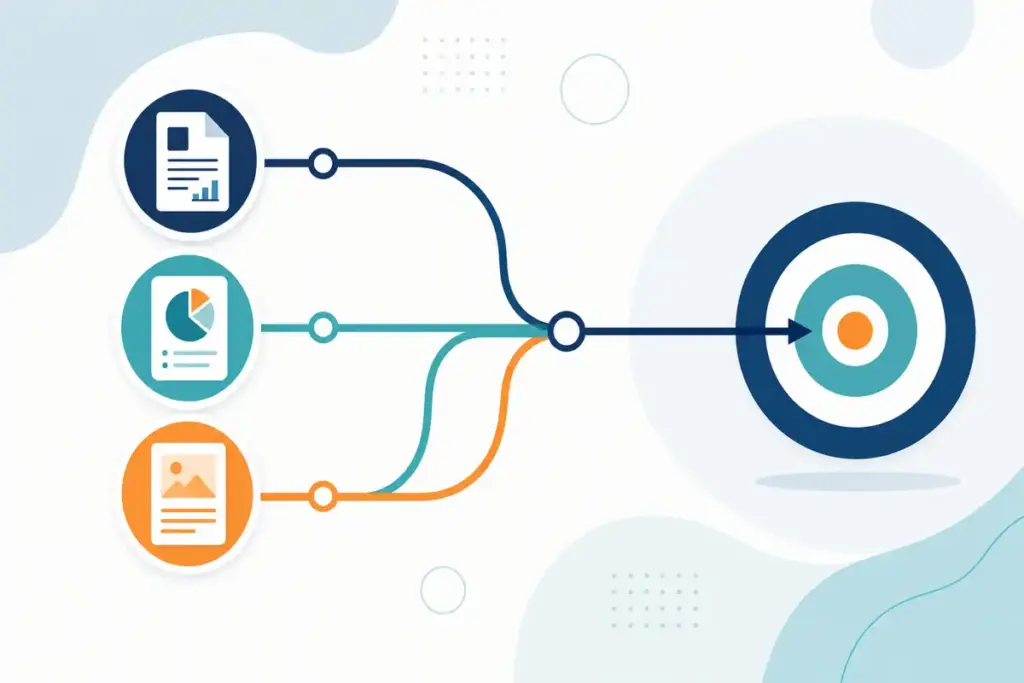




Most businesses that announce a digital transformation end up with new software and the same old problems. The licences get bought, the training sessions get booked and, six months later, staff are still exporting spreadsheets to work around the new system. The technology usually works as advertised. What’s missing is a plan that ties each tool to a specific business result, with someone accountable for it.
In this article, we’re going to discuss how to:
- Define what a digital transformation strategy should actually cover
- Sequence projects so early wins fund later ones
- Measure progress without relying on vanity metrics
What a Digital Transformation Strategy Actually Covers
A digital transformation strategy is a written plan for changing how the business operates using technology, with named outcomes, owners, budgets and a timeline. It sits above individual software purchases. If a decision can’t be traced back to one of its stated goals, it probably shouldn’t be funded.
In practice, a usable plan answers four questions: which processes cost the most, which problems to solve first, what can realistically change in 12 months and how success will be judged.
Why Management Matters More Than Tools
The Office for National Statistics has found a clear link between management quality and technology uptake. In its analysis of 2023 Management and Expectations Survey data, 88% of firms in the top decile of management practice scores adopted at least one of AI, cloud computing, robotics, specialised software or specialised equipment, against 51% of firms in the bottom decile.
The same research shows the most common barrier to AI adoption in 2023 was difficulty identifying business use cases, reported by 39% of firms, ahead of cost at 21% and skills at 16%. That’s a planning problem before it’s a budget problem.
Adoption is rising quickly. ONS figures published in July 2026 show the share of UK businesses with 10 or more employees using at least one AI technology rose from around 12% in late 2023 to around 35%. Faster uptake doesn’t guarantee better results, though, and plenty of firms find their AI pilots stall once they meet real workflows.
How to Build the Plan
Start With a Process Audit
Map the five or six processes that consume the most staff hours, such as quoting, invoicing, onboarding or customer support. Record how each one runs today, where work gets re-keyed and where errors appear. This baseline is what you’ll measure against later, so keep it honest.
Run a Short Discovery Phase
The GOV.UK Service Manual treats discovery as a separate stage before any build work, focused on understanding users, their context and the constraints that could affect delivery. It also treats a decision not to proceed as a valid outcome. Private firms can borrow this approach cheaply: talk to the people who use the process, test assumptions and only then pick tools.
Sequence by Payback
Rank projects by cost, effort and how quickly they return value. A move to cloud accounting or a shared customer database often pays back faster than a bespoke platform. This is where a digital transformation strategy earns its keep, because early wins build credibility and free up budget for harder changes. Avoid running more than two or three significant changes at once, as teams can only absorb so much disruption.
Consolidate Before You Add
Many growing firms already pay for overlapping tools. Before signing a new contract, review what you have, cancel duplicates and fix the integrations you rely on. We’ve looked at how bloated software stacks drain budgets and attention, and the same discipline applies here.
Measuring Progress That Matters
Track operational measures rather than activity. Logins and licences purchased tell you little. Better indicators include hours saved per process, error rates, time taken to issue an invoice, customer response times and the number of manual workarounds still in use.
Review these quarterly against the baseline from your audit. If a project hasn’t moved its target measure within two quarters, pause it and ask why before spending more. A digital transformation strategy should be a living document, updated as the business learns what works. For more practical reading on systems and software choices, browse our business technology guides.
Common Mistakes to Avoid
The first is treating transformation as an IT project. When the technology team owns the plan alone, operational leaders disengage and adoption suffers. The second is buying for features rather than problems. The third is underfunding training. Staff need time to learn new systems, and that time should be budgeted.
Conclusion
A useful digital transformation strategy is short, specific and tied to measurable business results. It starts with how the business works today and only then turns to vendors. The firms that get value tend to be the ones with clear management habits, a sensible order of projects and the patience to measure properly.
- Audit your highest-cost processes before choosing any software
- Sequence projects by payback and limit how many run at once
- Measure hours saved and error rates, then review quarterly
Frequently Asked Questions
What Is a Digital Transformation Strategy?
It’s a written plan that sets out how a business will change its processes using technology, with defined goals, owners, budgets and timelines. It guides which projects get funded and in what order.
How Long Does Digital Transformation Take?
There’s no fixed timeline, as it depends on the size of the business and the number of processes involved. Most firms find it more useful to plan in 12-month cycles with quarterly reviews than to set a single end date.
Do Small Businesses Need a Digital Transformation Strategy?
Yes, although it can be a few pages rather than a formal document. Small firms often gain the most from simple changes such as cloud accounting or a shared customer database.
Why Do Digital Transformation Projects Fail?
Common causes include unclear goals, weak ownership and too little investment in staff training. ONS research also shows many firms struggle to identify where technology such as AI would actually help.
Sources Consulted
- Office for National Statistics: Artificial intelligence in UK businesses, 2023 to 2026
- Office for National Statistics: Management practices and the adoption of technology and artificial intelligence in UK firms, 2023
- GOV.UK Service Manual: How the discovery phase works
- IBM: How to Build a Successful Digital Transformation Strategy
This article is for information only and does not constitute professional, legal or financial advice. Seek independent advice before making significant technology investment decisions.